How does the robotic arm help reduce the scrap rate?

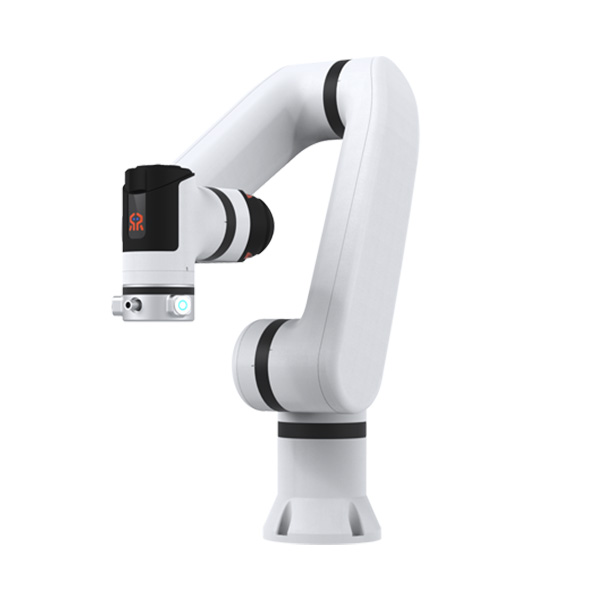
A robot arm play an important role in improving the quality of industrial production. Reducing scrap rates not only means cost savings, but also more stable, predictable production results. Robotic arms have several features that directly contribute to minimising defects.

1. Precise, repeatable movement

The big advantage of robotic arms is that every movement is repeated in the same way, even thousands of times in a row.
This is particularly important where:

  • millimetre accuracy is needed,
  • deviations often occur during manual work,
  • the manufacturing process is sensitive to positioning errors.

Repeatability reduces errors that could result from human fatigue, inattention or differences in dexterity.

2. Consistent process quality

The operation of robots is not affected:

  • the workload of the worker,
  • the length of the shift,
  • the daily performance fluctuations.

The result is a stable workflow that always follows the same parameters, which significantly reduces the chance of waste.

3. Minimum margin for error in repetitive tasks

A robotic arms are ideal for processes where the majority of errors are due to monotony.
Examples of this type of operation are:

  • bolting, fixing, component assembly,
  • dosing, filling, sorting,
  • welding or surface treatment steps.

The constant precision of the robot means that the number of errors in these jobs can be drastically reduced.

4. Supporting quality control processes

In certain work phases, the robotic arms:

  • with sensors,
  • with cameras,
  • or measuring instruments

are able to assist quality control.
These systems can detect deviations consistently and quickly, so that defective parts do not get through to production.

5. Less damage and fewer surface defects

Certain products or materials may be sensitive to human touch (e.g. fingerprints, scratches, excessive grip).
The robotic arm:

  • works with precisely controlled force,
  • does not drop the workpiece,
  • not too tight,
  • does not cause surface damage.

This directly reduces the scrap rate in manufacturing environments where material sensitivity is an important factor.

Summary

The robotic arms reducing the scrap rate with precision, with repeatability, with consistent quality of work and with automated control are achieved.
The result is more predictable production, fewer defective products and significant cost savings in the long run.

More articles

    📞 Call Request for quotation