Competitive advantage in manufacturing: why automation is key in 2025

In 2025, manufacturing companies will face a combination of labour shortages, cost pressures and customer expectations (shorter lead times, greater flexibility). World Economic Forum says that technological change and automation will be the main drivers of job and skills restructuring in the period 2025-2030 - with companies focusing on retraining and targeted workforce planning.

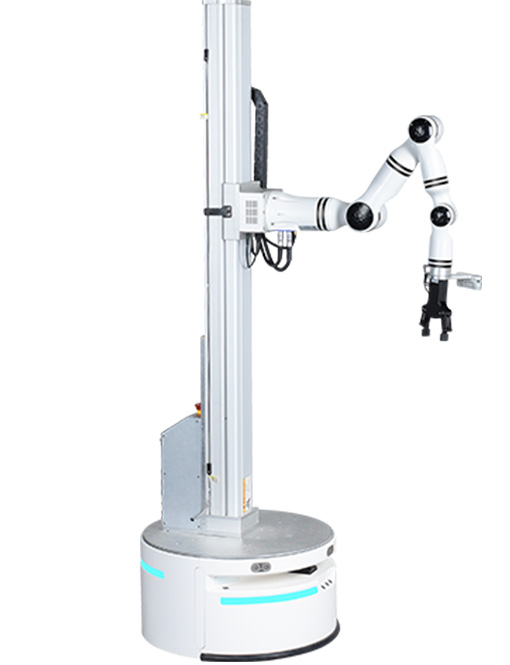
Compound lifting robot

Why now?

  • Evidence of mass uptake: according to IFR World Robotics 2024, 541,000 industrial robots were installed in 2023 (over 500,000 for the third year in a row), and the number of robots in operation worldwide has increased to over 4.3 million. Of the new installations, 70% were in Asia, 17% in Europe and 10% in the Americas. This indicates that automation is now the „standard equipment” of the competition.
  • Organisational maturity still low: the majority of companies are investing in AI/automation, but few feel really mature - the barrier is often not employees, but management control and scalability.

How to give an immediate advantage?

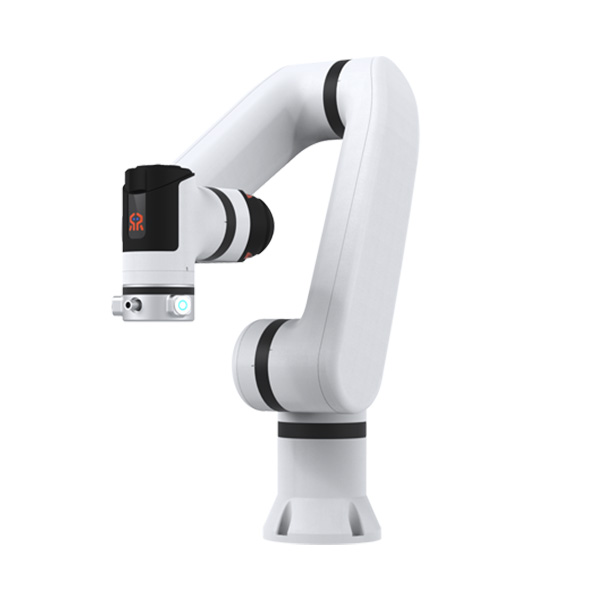
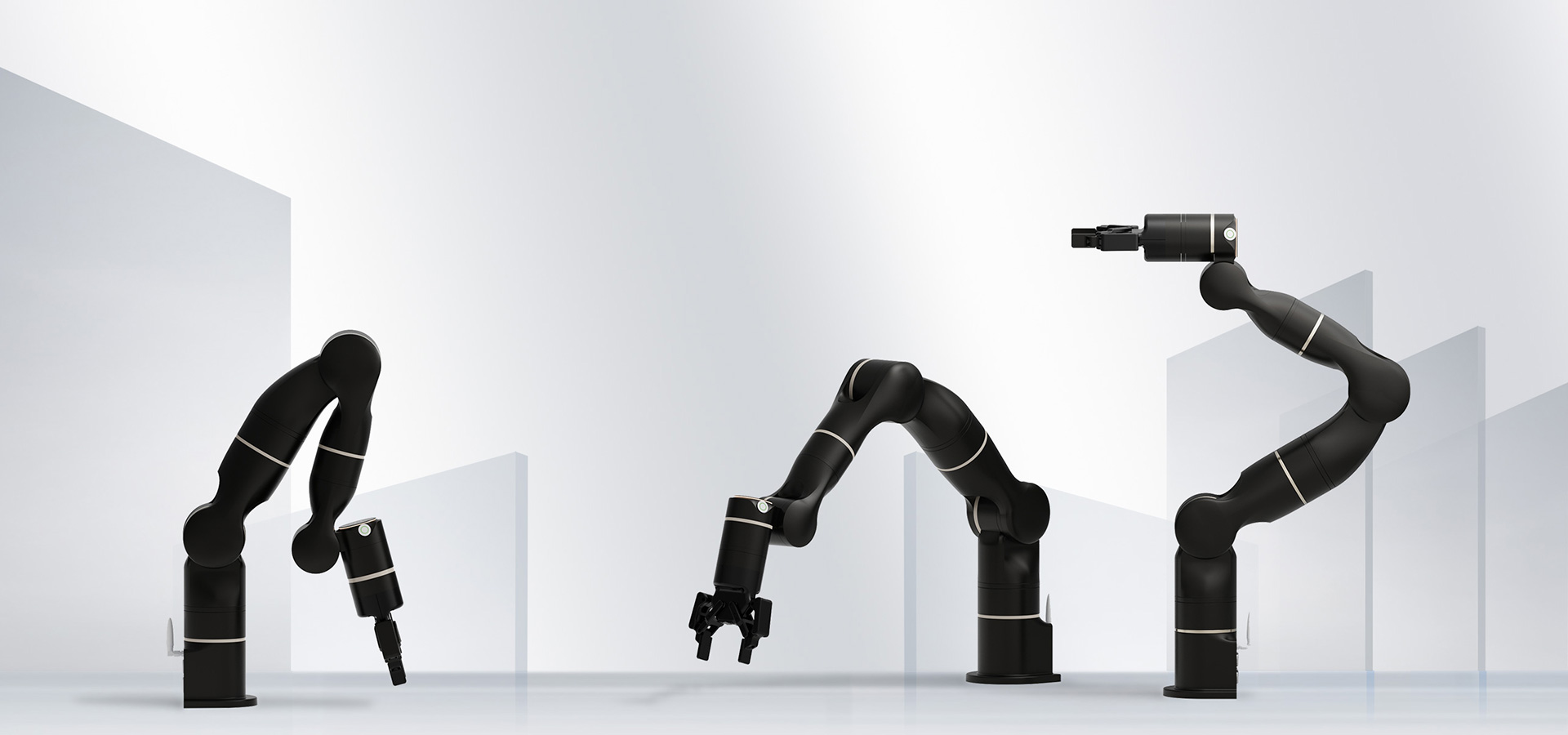
  • Quick start-up, short changeover: the services we offer robot arm can be operated by physical teaching (drag & drop) and precise programming (teaching desk, API/JSON, coordinates); their integrated controller simplifies installation, Wi-Fi/Ethernet/Ethernet/ Bluetooth / USB / RS485 and accession gives flexible integration.
  • Accuracy in an industrial environment: typical repeatability of ±0.05 mm, IP54 protection and low power consumption (max. 200 W, average ~100 W) for continuous, stable production.
  • Secure human-robot cooperation (cobot): the RM series has a built-in safety module that stops immediately in case of contact - the -6F models support fine force control with a 6-axis force/torque sensor (200 N / 7 Nm, <0.1% FS).
  • Modular end tool ecosystem: 10+ plug-and-play adapters (electric grippers - including infinite rotation, adaptive gripper, vacuum end tool, flexible gripper, 3D cameras) make task switching quick and expand the use cases.

Which solution for what?

  • General, 5 kg cooperative tasks: RM Series (610-638.5 mm working radius).
  • Big reach, extensive workspace: RML Series (900-928,5 mm, 3 kg load).
  • Cost effective/compact: ECO Series (5 kg models + ultra compact ECO62-B).
  • Entry level, 7 DOF: GEN Series (2 kg load).

Summary: the competitive advantage in 2025 lies with manufacturers who can offer proven scalable technologies with rapid deployment and well-chosen with robotic arm ecosystem combine - while consciously developing organisational and skills maturity.

More articles

    📞 Call Request for quotation